Markets Rally as U.S.-China Tariff Truce Sparks Investor Optimism
- Market News

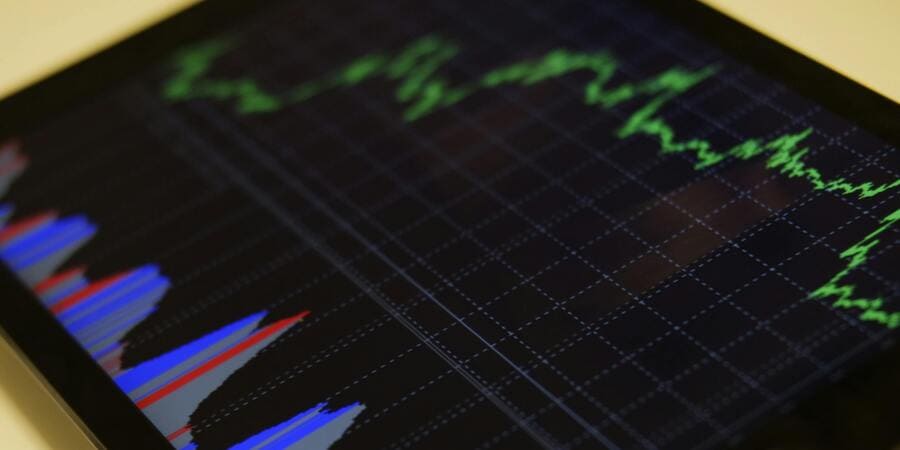
Markets around the world lit up after the U.S. and China jointly announced a 90-day pause on heightened tariffs, easing tensions between the two economic giants. Under the new terms, the U.S. will reduce duties on Chinese imports from 145% to 30%, while China scales back tariffs on U.S. goods from 125% to 10%. This adjustment was seen by investors as a signal that both sides are willing — at least temporarily — to prioritise economic stability over political posturing. The result? A major stock rally, with the Dow Jones up nearly 1,200 points, and the S&P 500 and Nasdaq rising 3.3% and 4.4% respectively. Tech stocks led the way, as companies like Apple and Nvidia rebounded on expectations of smoother global trade flows. It was a big win for risk appetite, and a much-needed dose of adrenaline for a market weary from geopolitical static.
Momentum was strong across the board as sectors previously burdened by tariff threats saw renewed investor interest. Industrials, retail, and manufacturing shares all surged, while commodity markets responded with upticks in energy and metals pricing. Even currencies reflected the market mood, with the Chinese yuan firming slightly and the dollar softening on global optimism. Fixed-income markets were more cautious, though, with bond yields rising only modestly, suggesting that not everyone was convinced the trade clouds had cleared. Still, the prevailing mood was one of optimism — or perhaps just relief — after months of economic uncertainty. When it comes to market psychology, sometimes a pause in pressure is all it takes to ignite a rally.
However, not everyone is convinced this bounce has staying power. The temporary nature of the deal means it could just be a short-term fix, rather than the start of a sustained de-escalation. Corporate strategists are still hesitant to revise earnings forecasts until more clarity emerges on trade policy. For many, this is more about market mood than material change. Nevertheless, it underlines how sensitive financial markets remain to global diplomacy — even if it’s only a temporary reprieve. The markets may have surged, but the real test will come if trade talks stall again.


The framework announced includes a halt on any new tariff hikes, with both sides agreeing to review trade concerns over the coming months. The goal, according to U.S. officials, is to use this time to make progress on contentious topics like technology exports and supply chain dependencies. China, on its end, emphasized stability and predictability for both economies and markets, without committing to any structural changes. What we have, then, is a tactical pause designed to lower short-term risk rather than solve long-term disputes. The revisions in tariff rates are significant in scale, but do not come with any clear commitments or detailed timelines. Investors and economists are watching closely to see if this evolves into something more concrete — or simply expires with no further progress.
That ambiguity hasn’t gone unnoticed in the business community. Global companies impacted by prior trade barriers are cautiously optimistic, but many are still holding off on major procurement or expansion decisions. There’s a general understanding that these kinds of agreements tend to be fragile and driven by politics as much as economics. In boardrooms, the question isn’t “is this good news?” — it’s “how long does it last?” Some sectors, particularly tech and auto manufacturing, are already adapting operations around geopolitical pressure. So while markets have responded well, supply chain managers remain in scenario-planning mode.
For traders and analysts, the real question is whether this 90-day window opens the door to genuine negotiation or simply buys both governments some breathing room. Financial institutions are unlikely to reposition entire portfolios based on a temporary policy change, but it does reset risk assumptions in the short term. Some are taking the opportunity to rebalance holdings and add back exposure to previously sidelined sectors. Meanwhile, others are choosing to stay hedged, preferring not to bank on headlines. Regardless of strategy, one thing is clear: this tariff pause has momentarily shifted the tone — but it hasn’t changed the fundamentals.
While the market reaction has been overwhelmingly positive, investor caution hasn’t disappeared — it’s just temporarily been pushed to the side. Experienced fund managers know that temporary deals often serve more as momentum boosters than policy pivots. With both countries facing internal economic challenges, political incentives may still drive future trade decisions. That makes the current tariff reduction more of a tactical adjustment than a directional shift in global trade policy. In other words, we’re not out of the woods — we’re just taking a break from the noise. Expect portfolios to reflect that view, balancing growth allocations with defensive strategies.
Institutional traders are particularly wary of reading too much into one good week. Options markets show that volatility hedges remain elevated, a signal that not everyone is buying into the “new normal” narrative. Some are using this rally as a chance to take profits, particularly in names that bounced hardest from recent lows. Others are rotating into sectors less affected by trade news, focusing instead on earnings and macro data. It’s a classic example of “trade the reaction, hedge the risk.” The short-term upside is undeniable — but so is the long-term uncertainty.
Looking ahead, the next few months will be critical. If talks between the U.S. and China progress into structured agreements with real deliverables, investor confidence could climb further. But if tensions resurface, or worse, if the rollback is reversed, the market could easily give back its gains. For now, traders are cautiously optimistic — but that optimism is on a short leash. As always, markets love clarity. And despite the bounce, we’re still waiting for it.