EU Unveils Targeted Response to New U.S. Tariffs in Latest Trade Dispute
- Market News

The recent U.S. decision to impose fresh tariffs on European exports has reignited tensions between two of the world’s largest trading partners. The measures, introduced earlier this month, target sectors such as steel, electric vehicles, and agri-food products, including iconic goods like French cheese and German machinery. The move, according to U.S. trade officials, is aimed at “rebalancing” certain long-standing trade dynamics and protecting domestic producers. However, the timing and scope of the decision have raised concerns in Brussels, where officials see it as a clear escalation in trade friction.
The European Commission responded promptly, describing the tariffs as “unilateral and disproportionate,” and stating they threaten the principles of fair and rules-based global trade. While calls for calm have echoed through diplomatic channels, the bloc has made it clear that it intends to act in defense of its economic interests. EU member states held a series of urgent consultations and rapidly aligned on the need for countermeasures. This level of cohesion — often elusive among the 27-member bloc — highlights the seriousness with which the EU views the situation and its determination to avoid appearing passive in the face of protectionist pressure.
Beyond the economic impact, the symbolic weight of the decision is not lost on EU leaders. The transatlantic relationship has always been commercially intertwined, and the introduction of new tariffs on foundational industries signals a concerning shift away from negotiation-based resolution. European officials have stressed that this kind of trade policy undermines trust, disrupts businesses, and adds instability to an already uncertain global economic environment. For Brussels, this is about more than just tariffs — it’s about setting a precedent for how disputes are resolved going forward.
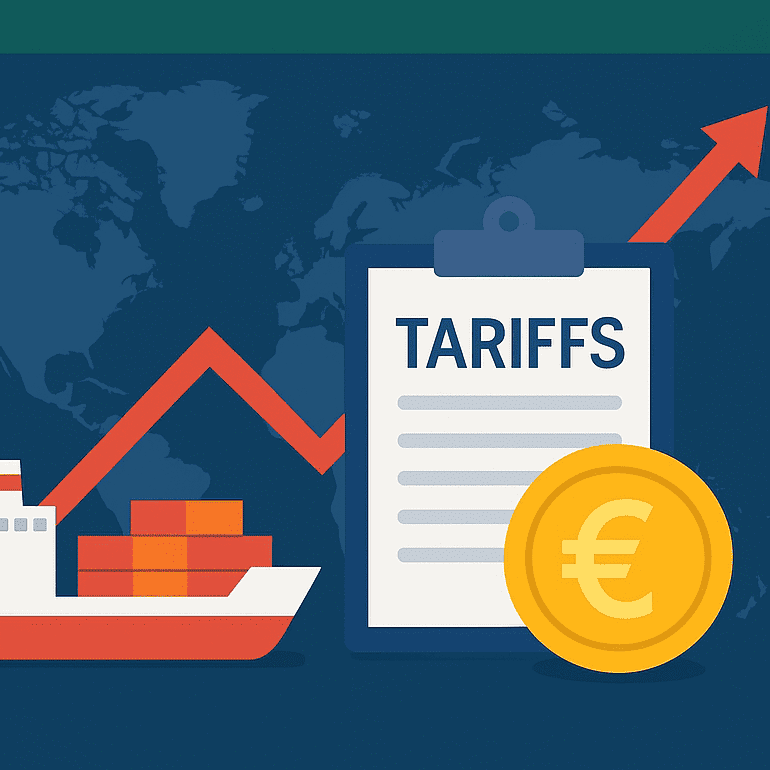

Brussels has laid out its intention to implement a series of proportional countermeasures designed to balance the economic impact of the U.S. tariffs without escalating the situation into a broader trade conflict. The proposed measures, currently under review, target strategic U.S. exports such as agricultural products, energy imports, and high-value industrial goods. These sectors were carefully chosen not just for their economic relevance, but for their political sensitivity — ensuring that the response will be felt without triggering unnecessary disruption.
According to EU Trade Commissioner Elisa Damião, the approach will remain fully compliant with World Trade Organization (WTO) rules and be guided by principles of fairness and proportionality. The EU’s countermeasures are expected to be finalised by early May, after a round of consultations with industry groups and national governments. The Commission has indicated that it will also explore temporary support mechanisms for companies directly affected by the U.S. tariffs. The goal is to protect European competitiveness while maintaining the bloc’s image as a consistent and rules-abiding trading partner.
Affected industries across Europe are preparing for turbulence. Exporters in automotive, aerospace, and wine & spirits are among those bracing for additional costs and complications, including customs delays, renegotiated contracts, and uncertainty in long-term planning. For many firms, the timing couldn’t be worse — coming just as they were recovering from supply chain disruptions, inflationary pressure, and weak global demand. Industry associations are urging national governments to remain proactive and supportive, warning that without coordinated action, the tariff dispute could threaten vital sectors of the European economy.
The fallout from this dispute has already begun to ripple through global markets. European equity indices saw modest declines following the initial announcement, while the euro weakened slightly against the dollar amid investor uncertainty. Analysts are closely watching developments for signs of broader contagion, particularly in sectors dependent on international supply chains. Although the immediate economic damage is expected to be contained, the longer-term risk lies in the normalization of tariffs as a political and economic tool — a trend that could complicate future trade policy on a global scale.
The disagreement also reflects a deeper trend: a shift toward strategic protectionism, where trade tools are increasingly being used to pursue industrial and geopolitical goals. This reorientation may serve short-term interests, but it adds volatility to cross-border commerce and undermines the reliability of global supply networks. In an environment where businesses already face heightened uncertainty, the added burden of politicised trade policy introduces new risks and discourages investment. Many European business leaders are calling for a return to predictability, warning that the current approach erodes confidence and delays recovery in key export sectors.
Despite the tensions, there is still room for resolution. EU officials have reiterated their willingness to engage in structured dialogue to resolve the issue diplomatically. Backchannel discussions are reportedly ongoing, with trade envoys from both sides seeking a face-saving compromise that could de-escalate the situation without abandoning their respective positions. Until then, the EU will proceed with its measured response — and if necessary, expand it — while maintaining pressure through institutional channels. For now, businesses are left navigating yet another layer of global uncertainty, this time brought not by a virus or a war, but by a tariff.